
2026-10-09 · David Ramirez
How Desert Dust Clogs AC Coils in Mesquite Homes
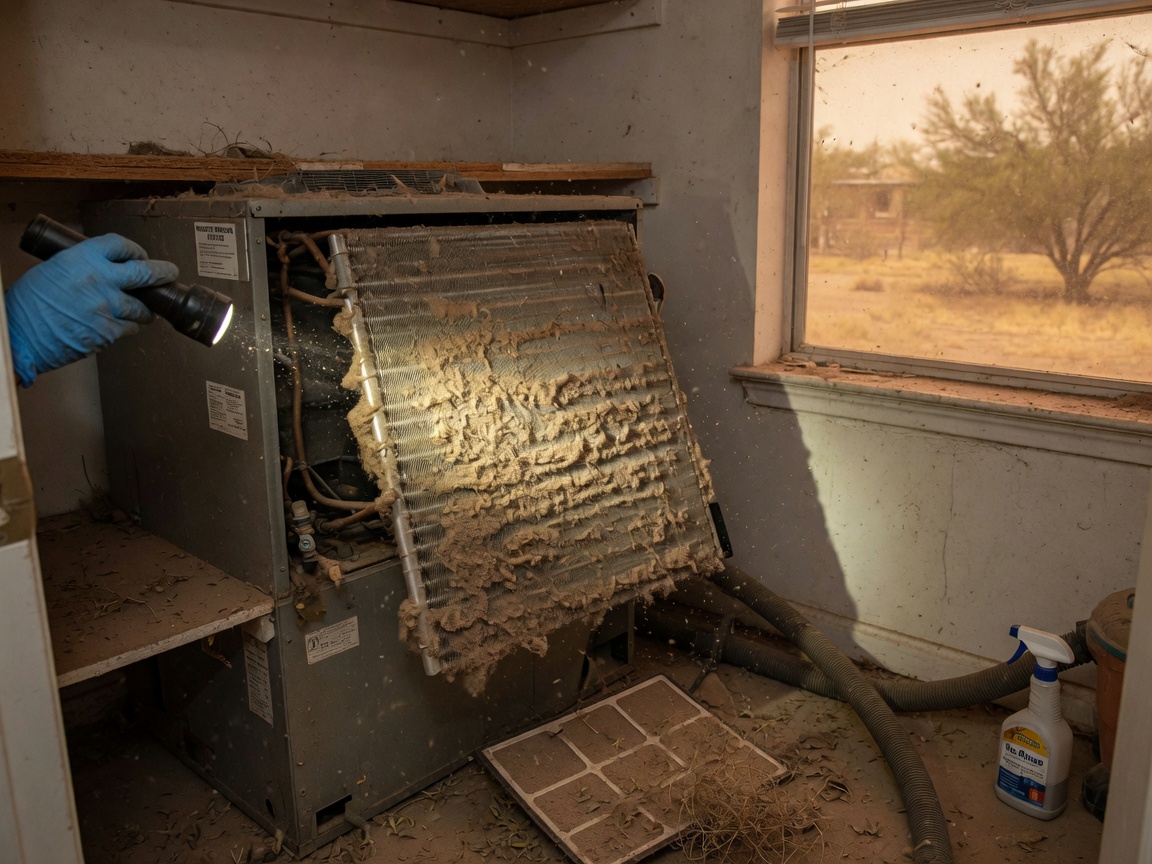
Desert dust reaches Mesquite AC coils in 4–8 months during peak summer heat when winds carry particles from surrounding Clark County terrain into homes near the Virgin River Casino and Mesquite Golf Course. The fine silt settles on both evaporator and condenser coils, forming a layer that blocks airflow and forces the compressor to run longer cycles. This buildup happens quicker here than in milder regions because daytime temperatures often exceed 100 degrees while nights stay warm enough to keep systems running continuously.
How Mesquite's Hot Desert Climate Drives Dust into Systems
Mesquite sits in Clark County where summer highs push systems hard and mild winters still require occasional cooling. The dry air holds little moisture, so dust stays airborne longer and gets pulled through intake vents in homes across Mesquite Heights. Particles smaller than 10 microns pass standard filters and land on coil fins, reducing heat transfer within the first season. Winds that pick up near the CasaBlanca Resort carry extra silt from undeveloped land, and systems serving single-story homes in Desert Lakes see heavier loads on rooftop condensers. Proximity to Las Vegas means occasional traffic dust mixes with local desert material, but the dominant issue remains the constant fine grit from the Mojave floor. Without intervention the restricted coils raise energy use and shorten compressor life in the 8–12 year range typical for units here.
Coil Clogging Patterns in Mesquite Heights and Desert Lakes
Homes in Mesquite Heights often feature slab-on-grade construction with return vents close to floor level, pulling in dust stirred by daily foot traffic. Desert Lakes properties sit nearer open desert edges, so afternoon winds deposit more material on outdoor condenser coils that already battle 110-degree air. Both neighborhoods share the same Clark County water quality that leaves mineral traces when coils are cleaned improperly, but the primary problem is the dust itself. Evaporator coils inside the attic or closet accumulate a gray-brown film that inspection reveals as 1/16 inch thick after one summer. Condenser coils on the roof or side yard collect larger grains that reduce the 20–25 degree temperature split the unit should maintain. Residents near the Mesquite Golf Course report faster buildup during spring because irrigation and mowing stir additional particles into the air.
Steps That Slow Dust Accumulation on Coils
Change filters every 30–45 days using MERV 8 or higher media sized for your unit's return. Schedule AC maintenance twice yearly so technicians can wash coils with approved coil cleaner before the film hardens. Add a whole-home air cleaner or upgrade to pleated filters if your system can handle the static pressure. Keep outdoor units clear of landscaping debris and rinse condenser coils monthly with a garden hose on low pressure during the hottest months. HVAC duct cleaning removes dust reservoirs inside the ductwork that otherwise recirculate onto coils. These steps keep airflow within factory specs and maintain the temperature differential the system was designed to deliver in Clark County's climate.
When Restricted Coils Require Professional AC Repair
Rising indoor humidity, longer run times, and warm air from vents signal that coils need attention beyond homeowner cleaning. Technicians measure static pressure and temperature split to confirm the restriction before any service. In Mesquite Heights and Desert Lakes, calls increase after June when systems that ran all spring finally show reduced capacity. Signs Your AC Needs Repair Before Summer Temperatures Peak outlines the exact symptoms local techs see every year. If the unit is older, compare repair costs against replacement through the Typical Costs for AC Capacitor Replacement in Mesquite guide and similar articles. Mesquite Desert Air at 355 W Mesquite Blvd Ste B50D remains available 24/7 to inspect coils and restore performance without unnecessary upsells.